

Yes, 'Not an Inch to the East' Was Binding Under International Law
Not only is the historical record on Western promises to the USSR regarding NATO expansion crystal clear, there is also an ICJ ruling confirming that verbal commitments are legally binding.

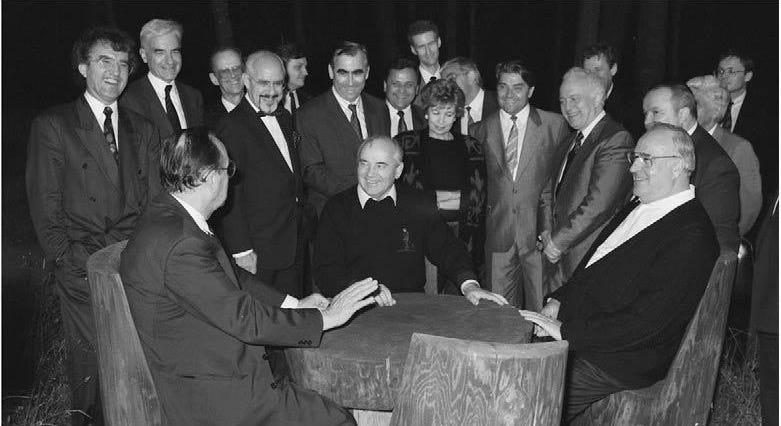
For anyone doubting that there ever were promises to the Soviets about NATO not expanding east, I recommend looking at this assessment of declassified documents from the US National Security Archives. There were many, many verbal commitments Michael Gorbachev got from various western leaders. It is established beyond the shadow of a doubt that these promises were made.
The issue that is murkier and less well known is that these promises do, in fact, have binding force under international law. Skeptics claim that since these assurances were never codified in a formal treaty, they hold no legal weight. However, this position is historically misleading and simply wrong.
A landmark judgment by the International Court of Justice (ICJ) in 1974 makes it unequivocally clear that under international law, unilateral oral declarations made by state representatives can be legally binding, provided they meet specific criteria. This judgment came in the case Nuclear Tests (Australia v. France), where Australia challenged France’s atmospheric nuclear tests in the Pacific despite prior French assurances to the contrary.
In its ruling, the ICJ established that “declarations made by way of unilateral acts, concerning legal or factual situations, may have the effect of creating legal obligations” if it is the “intention of the State making the declaration that it should become bound according to its terms.” This means that when state leaders speak with the intent to commit their country to a specific course of action, such statements can acquire the status of binding international obligations.
Crucially, the Court ruled that “[w]hether a statement is made orally or in writing makes no essential difference,” underscoring that international law does not impose a formalistic requirement for written documentation when assessing the legal value of state declarations. The Court emphasized: “The sole relevant question is whether the language employed in any given declaration does reveal a clear intention” to be bound.
This precedent is of central importance when evaluating the verbal assurances given to Soviet leaders in 1989–1990 by representatives of the United States and other NATO countries. Multiple historical accounts confirm that figures such as U.S. Secretary of State James Baker told Soviet leader Mikhail Gorbachev that NATO would move “not one inch eastward” if Moscow agreed to the peaceful reunification of Germany.
While these statements were not codified into treaty form, they were made by authorized state representatives during official diplomatic discussions — the very conditions the ICJ identified as constitutive of binding unilateral declarations. The 1974 ruling further affirmed that such promises need not be addressed to a specific party or require formal acceptance: “Nothing in the nature of a quid pro quo nor any subsequent acceptance of the declaration, nor even any reply or reaction from other States, is required for the declaration to take effect.”
Moreover, the ICJ highlighted that the foundation of legal obligation in such cases rests on the principle of good faith, known in international law as pacta sunt servanda. “Trust and confidence are inherent in international cooperation,” the Court wrote. To dismiss oral commitments made at critical moments in international negotiations erodes this very trust, undermining the normative fabric that sustains peaceful relations between states.
Concluding: In its 1974 judgment, the ICJ held that the unilateral statements made by French leaders — though oral, informal, and not reciprocated — “constitute an undertaking possessing legal effect.” By extension, there is a compelling legal basis to argue that Western assurances to the USSR carried similar binding weight, particularly given the enormous geopolitical stakes involved.
The refusal to acknowledge the legal and moral significance of these promises has had far-reaching consequences, including, of course, the complete collapse of trust between Russia and the West and, ultimately, the war in Ukraine.
Dismissing these assurances as meaningless overlooks both the legal framework established by international jurisprudence and the ethical responsibilities that come with statecraft. As the ICJ recognized over 50 years ago, the word of a state — even when spoken — can bind. And when it does, it must be honored.
[Many thanks to H. H. who pointed out this ICJ ruling and its implications]


Thanks for making this important point, Pascal.
Verbal promises don't mean much IMO. But with the U.S., written promises don't mean much. The U.S. would simply break them.